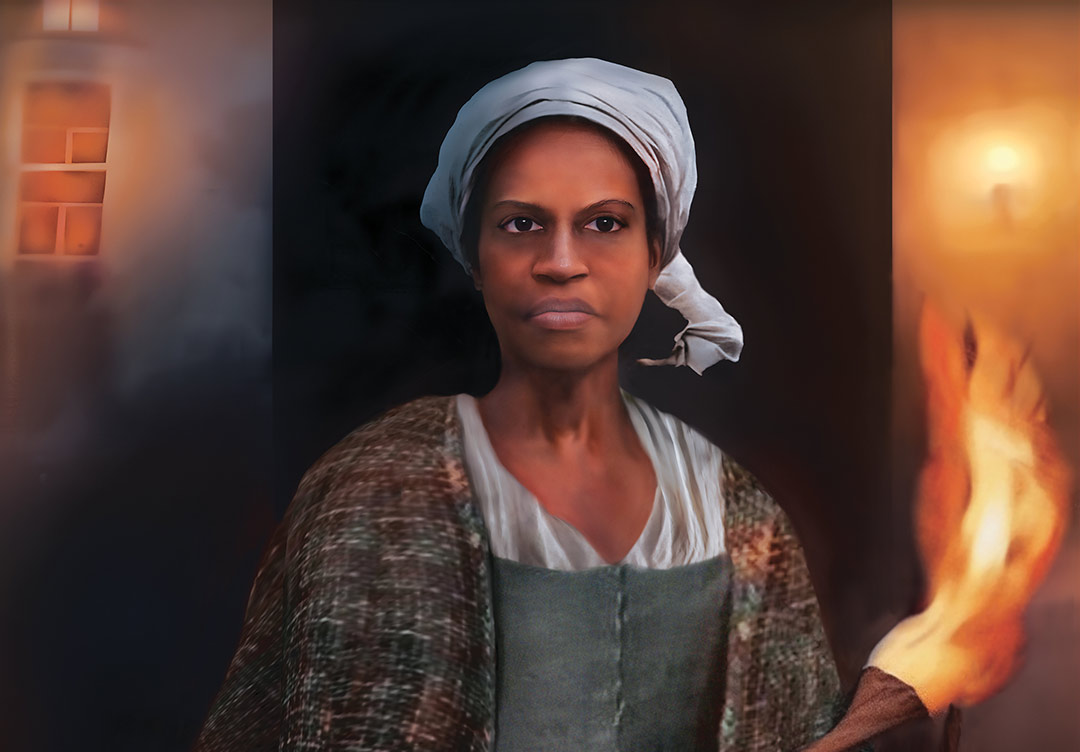
Reckoning with an uncomfortable past is an important part of the job of any national history museum. The Canadian Museum of Immigration at Pier 21 deals with the history of people coming to what is now Canada. This includes forced migrations through the transatlantic slave trade.
The exhibition A History Exposed: The Enslavement of Black People in Canada launched at the Museum in August of 2024 and has since begun travelling to sites across Canada. It deals with a grim and lesser-known chapter of our national history.
Recently, it received a special invitation to the United Nations.
History, exposed
Many Canadians are proud of the country’s history of giving sanctuary to refugees, including people who had escaped slavery in America, says now-retired Museum curator Dan Conlin, who co-curated the exhibition. Still, says Conlin, “A huge number of Canadians have no idea that we had over two centuries of slavery in Canada itself. That grim part of our history is a story that needs to be told.”
“Many people think it's a Caribbean or an American story,” says Conlin. “Well, it's affected many nations. And Canada was deeply involved through our connections to the West Indies trade and our part in shipping and the British Empire.”
The British Empire abolished slavery in 1834. The United States continued the practice until 1865.
The exhibition was created by the Museum in partnership with the Black Cultural Centre for Nova Scotia, which helped with expert consultation and content development and is working on a web version of the project. Dr. Afua Cooper, preeminent scholar of Black Canadian history and poet, was guest curator for the project, collaborating with Conlin.
Conlin says she “brought so much to this exhibit: perspectives, ideas, examples that never would have occurred to me. She gave the exhibit levels of depth and passion, as well as a huge knowledge of this topic.”
An invitation from the United Nations
“I got a phone call from the Museum’s Curator of Temporary and Travelling Exhibitions, Sara England, saying, ‘Guess what? The UN is interested!’” recalls Conlin.
Each year since 2008, on March 25, the UN marks the International Day of Remembrance of the Victims of Slavery and the Transatlantic Slave Trade. As part of the 2026 commemoration, the UN will host the exhibition from March 17 to April 19, 2026; it will be seen by tens of thousands of people from all over the world visiting the UN headquarters in New York City.
The invitation is significant: “It means a lot,” says Conlin. “It's a great chance to talk to a bigger audience about this story.”
Conlin will travel to the UN and speak at the opening of the exhibition. He has also been asked to give guided tours to some 300 high school students from schools all over New York City.
The exhibition, located in the hall outside the General Assembly, will also be seen by delegates from all over the world. “That's really thrilling,” says Conlin. “Also, the United Nations building in Midtown Manhattan is in a major tourism district. So, there's all those visitors to New York going to see the UN, they'll get an understanding of how enslaved people endured and resisted slavery in Canada.”
“I know some of these folks of the UN are hoping that other countries and societies can be inspired to tackle a hard subject by seeing what countries like Canada have done.”