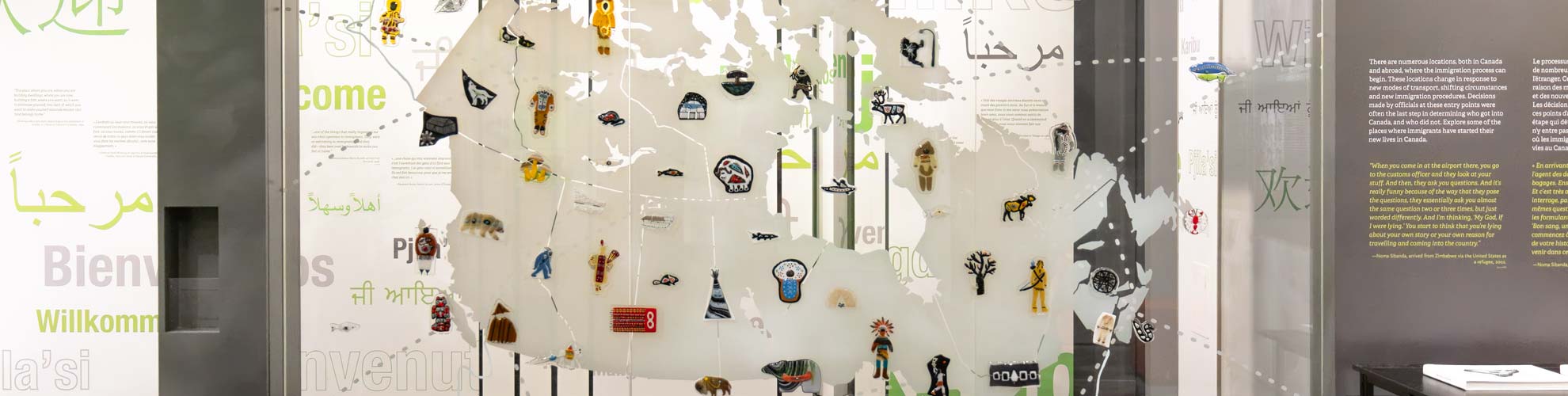
December 2025 to December 2027
"Our people have always travelled and traded throughout Turtle Island, and beyond. We wanted to reinforce the idea that cultures evolve and grow and adapt ... and that immigration is part of that story as people continue to weave their identities together and form new identities, as in the case of the Métis, for example."
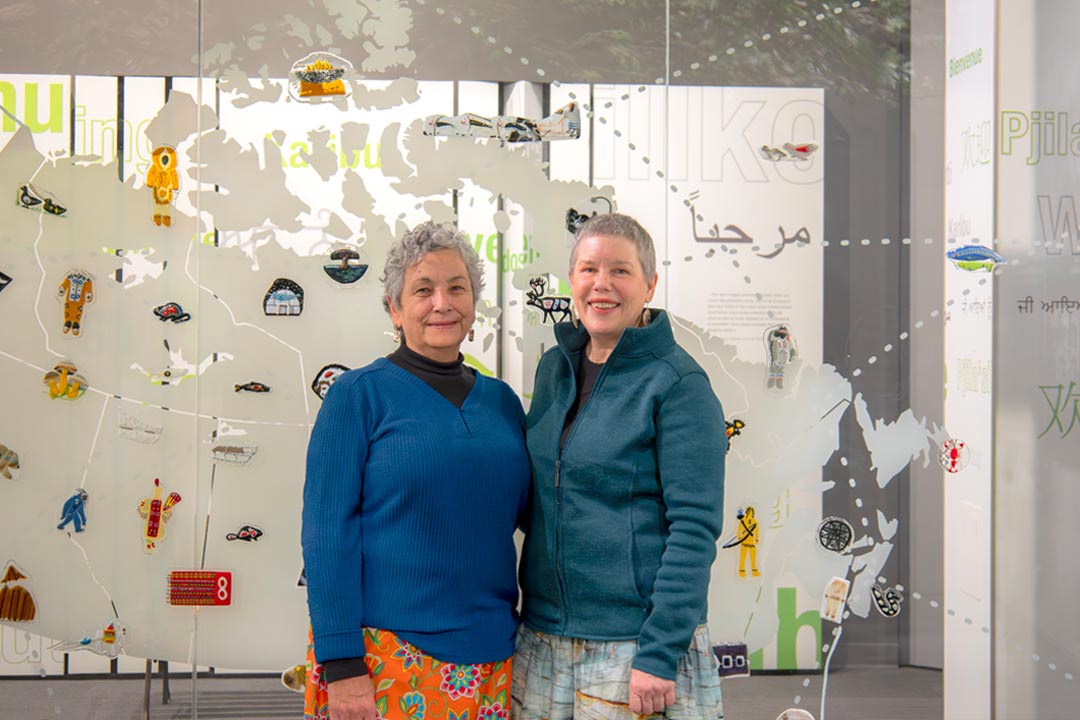
As fused glass artists, we wanted to showcase a small sample of the cultural vibrancy and diversity of the people of Turtle Island, primarily prior to contact. With this installation, we celebrate the knowledge, artistry, and technologies that have always shaped Turtle Island. Although we have taken an artistic approach with each piece created, and could not include every individual nation’s story, the installation is grounded in research and authentic representation based on tribal linguistic family groups. It includes references to language, cultural practice, innovation, and spirituality. We hope this installation inspires excitement to learn more about the rich culture of the original peoples of these lands.
Tribal Fusion Art is a collaboration between Melinda Robertson (Anishinaabe – Lake Manitoba First Nation) and Shannon Monk (Anisininew – St. Theresa Point First Nation / Mi’kmaq – Lennox Island First Nation / Celtic – Nova Scotia).
If you would like information about hosting Welcome to Turtle Island after December 2027, please contact the artists.
If you would like to bring a Tribal Fusion Art treasure home, please visit our Boutique.
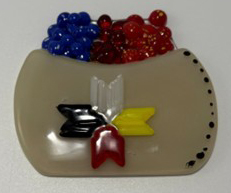
Basket of Berries
Basket holds stories woven through generations across Turtle Island, carrying both beauty and purpose. Crafted with skill and patience, it serves in daily life and ceremony alike—gathering berries for nourishment, healing, and rites of passage. Adorned with quillwork, its eight-pointed star shines in the four sacred colours—white, yellow, red, and black—symbols of balance and unity shared among many Nations. From Basket, we learn the harmony of art and sustenance; from Berries, we learn gratitude, renewal, and the sweetness of life’s continual return.
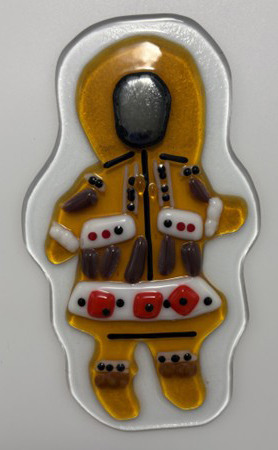
Iñupiat - Ceremonial Winter Clothing (in-NOO-pee-at)
The Iñupiat tradiitional territory expands across the frozen lands of the Western Arctic, carrying the teachings of skill, respect, and endurance. This image of ceremonial winter clothing is crafted from caribou and sealskin, with squirrel hide embellishments. Each garment reflects deep knowledge of the land and animals. Snow pants, parkas, and mitts protect against wind and ice, turning necessity into art. From this, we learn that survival is born from relationship—when human hands work in harmony with the gifts of the natural world.
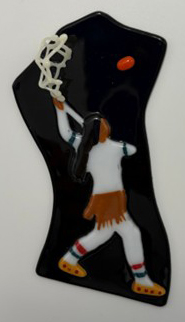
Lacrosse
Lacrosse runs swiftly across the fields of Turtle Island, carrying the spirit of unity, healing, and gratitude. Originating with the Haudenosaunee, it was gifted by the Creator as a medicine game—to bring wellness, settle conflict, and strengthen community. Valued as both sport and ceremony, Lacrosse teaches discipline, teamwork, and respect. Its rhythm echoes the heartbeat of the people, reminding us that play can be prayer, and that true unity is found through movement, purpose, and shared spirit.
Artist Statement:
Before there were maps, there were memories. Before the word immigration, there was the movement of peoples following the winds, the water, and the teachings of Creation. Across Turtle Island (North America), Nations travelled widely — carrying songs, food, and stories that linked ocean to prairie, tundra to desert.
These movements were not migrations of conquest or escape, but of relationship — people moving in rhythm with the land, guided by the teachings of reciprocity, respect, kinship responsibilities and balance with all living things.
From those ancient relationships came the ancestors of the Anishinaabe, Cree, Dene, Haudenosaunee, Inuit, Mi’kmaq, Tsimshian, and many others. Over generations, they braided together vast trade routes and family networks. Peoples met, married, adopted, shared — forming the deep web of interconnection that defines this continent to this day.
Tens of thousands of years later, when newcomers from Europe arrived, those same Indigenous values of kinship and movement would continue to welcome them in peace and friendship. New identities were shaped - among them the Métis Nation - whose language, culture, and homeland grew from both ancestral First Nations and later fur trade relationships.
In this way, the story of Turtle Island is not divided between “then” and “now.” It is the story of peoples who have always been here, finding home with the land and with each other. It is also the story of the resilience of our people, in the face of displacement and dispossession.
In the spirit of reconciliation and healing, we honour the past, stand firmly in the present, and work toward a future rooted in mutual understanding, respect for the Treaty relationship, and shared belonging on Turtle Island.