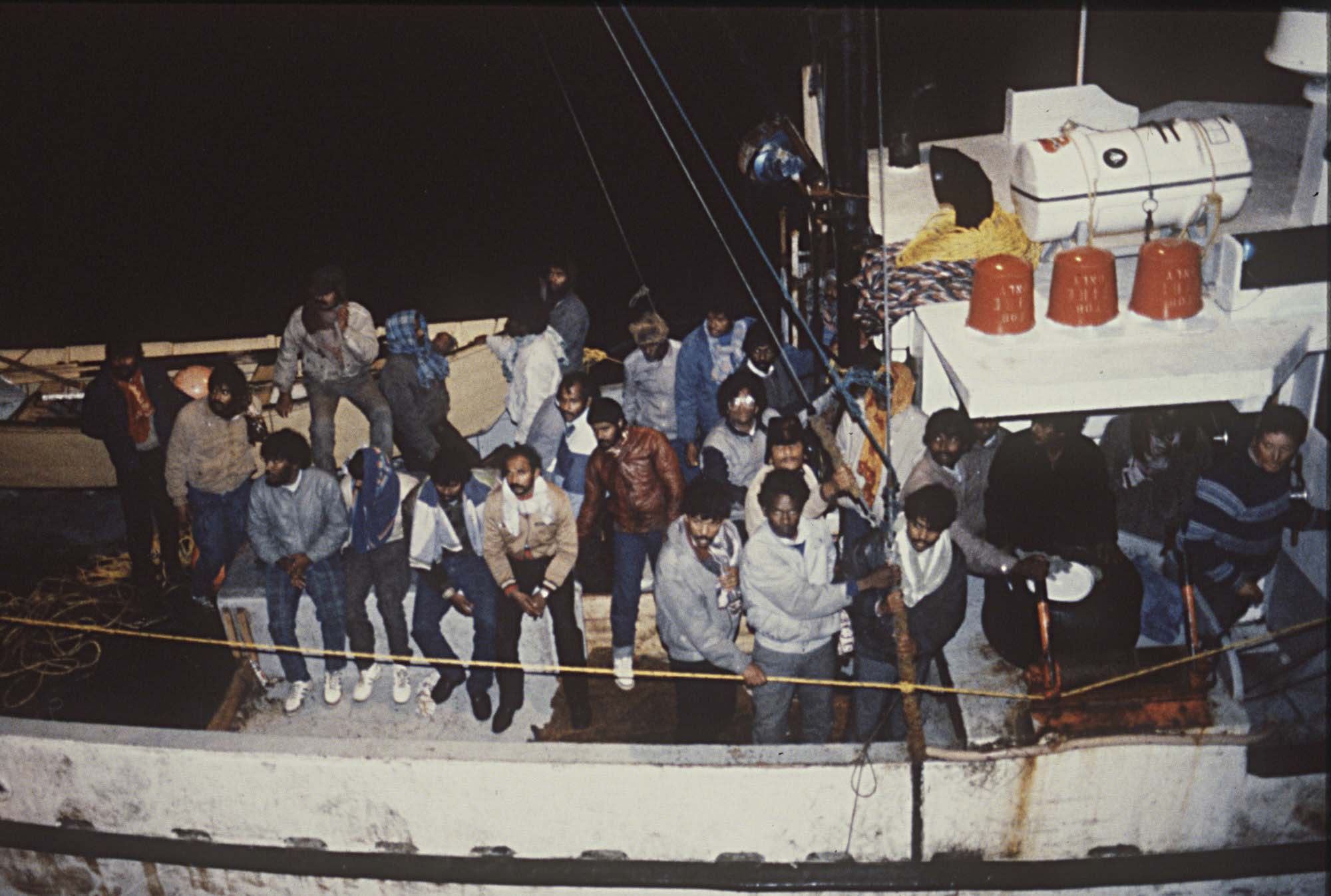
Newfoundland fisherman Gus Dalton dumped his boat-load of cod overboard.
There wouldn’t be room aboard his boat, MV Atlantic Reaper, if he was going to rescue the 155 men, women and children he’d found floating in two lifeboats off the southern shore of the province.
Fleeing violence
The people aboard the lifeboats were Tamils seeking asylum after the outbreak of civil war in their home country of Sri Lanka.
Sri Lanka’s civil war had begun in July 1983 with a pogrom persecuting the country’s ethnic minority Tamil population. Government forces and Sinhalese mobs targeted, attacked and killed Tamil civilians during what became known as Black July.
People did what they could to escape the violence. Many Tamils bought relatively inexpensive flights to East Berlin, went to the Berlin Wall, and applied for asylum in West Germany. The New York Times, in 1986, reported that West Germany had received some 30,000 Tamil refugees. Still, life there wasn’t easy; West German refugee policy meant they weren’t allowed to work for two years.
An inhumane passage
In West German refugee camps, a number of Tamils were offered clandestine passage to Canada aboard a cargo ship. The cost per passenger was equivalent to around $3,450 CAD.
The ship, called MV Aurigae, departed illegally from Brake, West Germany, on July 28, 1986, under cover of darkness. Its Captain and owner was a West German named Wolfgang Bindel. It is believed he received nearly half a million Canadian dollars for transporting the refugees.
One man, interviewed in 2016, described the conditions aboard.
For eleven days, we are sitting in fear in the cargo ship... We were all strangers. There were three or four women and a few children. The bread went mouldy in a few days so we had to just cook rice and frozen chicken or a simple congee. Our people cooked together. People were getting sick and some threw up. The ship was very dirty. We were all on the floor all the time. No beds, no berth, no comfort. We were refugees.1
When the limited supply of drinking water ran out, the captain said to drink seawater. Passengers were sickened by the smell of human waste that sloshed onto the floor from the buckets provided instead of toilets.
Left to fend for themselves
Twelve days after departing, the passengers were put onto two lifeboats tied together. One was equipped with a small outboard motor. They were told they were ten kilometres from Montreal.
Reportedly, MV Aurigae towed them until nightfall, then cut the tow rope and disappeared. The captain told them to head 350 degrees northwest.
They were at sea for three days and two nights until they were spotted by Captain Gus Dalton.
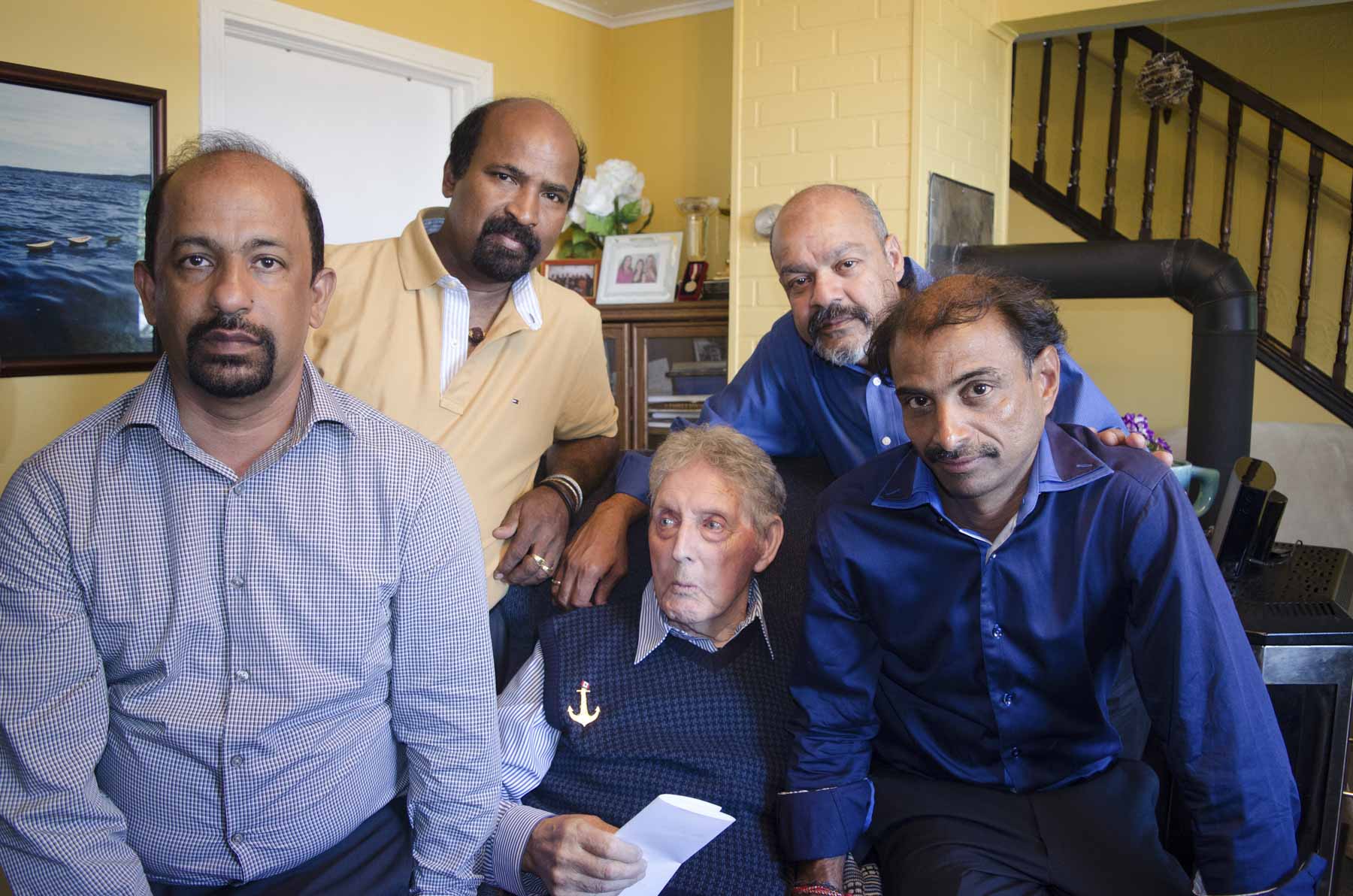
Immediate action
Captain Dalton immediately went into action. He dumped his own load of fish and got on the radio to coordinate other boats in the area to aid with the rescue.
The story of who these people were or where they’d come from wasn’t clear at first. Fearing that, since they had left from Europe, their asylum claims would be denied, they claimed to have come from India directly and that they had been floating for five days.
Canadian Coast Guard ship Leonard J. Cowley met the fishing boats, and the Tamils were transferred aboard and transported to St. John’s, where they were accommodated at Memorial University of Newfoundland’s residences and questioned by authorities.
Suspicion from the Canadian public
The story, and questions surrounding it, were widely reported in Canada and beyond. After the truth came out that they’d travelled from a West German refugee camp and had spent three days on the lifeboats, there was skepticism from some members of the Canadian public, concerned that Canada’s asylum policies were deeply flawed.
None of the leaders of Canada’s major political parties, however, agitated for the deportation of the Tamils.
Prime Minister Brian Mulroney was quoted as saying, “My government will do anything but allow refugees in lifeboats to be turned aimlessly around in the ocean and turned away from our shores. It’s not the presence of [155] frightened human beings searching for freedom and opportunity that’s going to undermine Canada or our immigration policies.”
The Prime Minister’s attitude wasn’t lasting. A year later, when 174 Sikh asylum seekers arrived on lifeboats in Nova Scotia, the Prime Minister issued an emergency recall of Parliament to discuss amending the Immigration Act. The resultant bill, C-84, gave the Government the power to turn away ships carrying those it suspected of making false asylum claims. The legislation was widely criticized by refugee advocates, legal scholars, churches and international organizations.
1 From an April 4, 2016, interview between Cyrus Sundar Singh and a subject who chose to remain anonymous. Cited in Singh, C. S. (2021). Floating to the lure of the promised land: Tamil refugees in Canada. In G. Melnyk and C. Parker, Finding refuge in Canada. AU Press.